
Other Manx Oddities...
There are many more unusual and unique features of the Isle of Man, and here are just a few of them.
There are many more unusual and unique features of the Isle of Man, and here are just a few of them.
The Three Legs of Man is the national symbol of the Isle of Man. It is not known for certain why it has been chosen as the symbol for the Manx flag, but its use dates back to pagan time. The three legged symbol represents the sun's rays, and symbols like this are common in Pagan and Viking cultures. It is therefore thought that the Vikings brought the three legged symbol with them when they came to the Isle of Man. Scicily has a similar symbol, and this too is thought to have been brought by the Vikings. The Manx symbol also bears the latin phrase "Quocunque Jeceris Stabit" which was added later. This translates as "Whichever way you throw, it will stand", and has become a Manx motto.
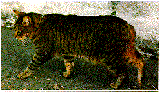 The Manx cat has become a symbol of the Isle of Man. It is
instantly recognisable because, unlike any other breed of cat,
the Manx cat has no tail. The scientific reason for the Manx
cat having no tail is that its backbone is too short.
Unfortunately, it is common for Manx cats to have abnormalities
in the last vertebra and in the last parts of the digestive
tract, and these may prevent the cat from living a normal
lifespan.
The Manx cat has become a symbol of the Isle of Man. It is
instantly recognisable because, unlike any other breed of cat,
the Manx cat has no tail. The scientific reason for the Manx
cat having no tail is that its backbone is too short.
Unfortunately, it is common for Manx cats to have abnormalities
in the last vertebra and in the last parts of the digestive
tract, and these may prevent the cat from living a normal
lifespan.
The Laxey Wheel, Lady Isabella, is the largest working water wheel in the world. It is powered by gravity-fed water, and the wheel used to operate a crank shaft running along the top of a viaduct, which was connected to a drainage pump in the hillside behind the wheel. It was built to pump water from the mines near Laxey in the north of the Isle of Man, and was capable of pumping 250 gallons per minute from a depth of 1,500 ft. Now, the Laxey Wheel exists only as a tourist attraction, and is one of the most famous landmarks of the Isle of Man.
 Back to the Isle of Man index page